Residential Proxies for Effective Price Discovery
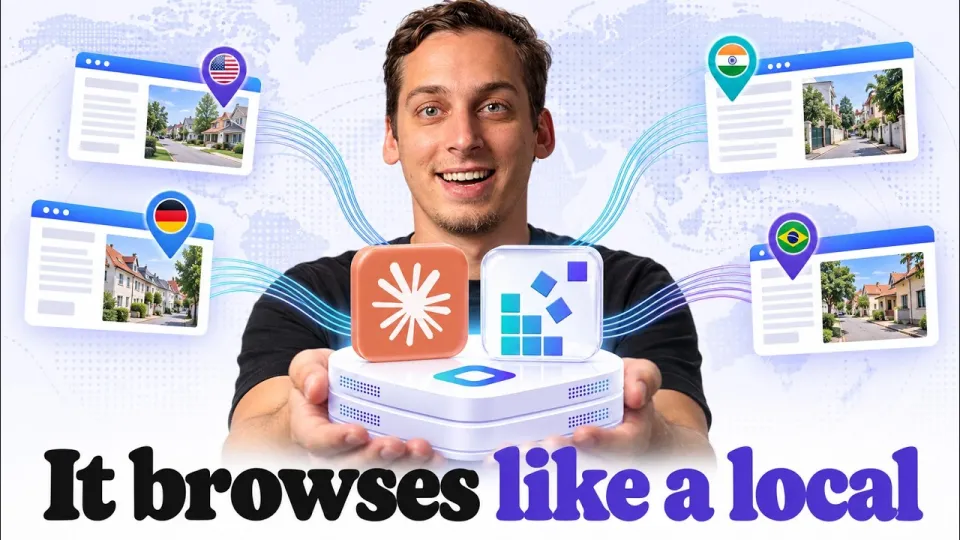
Video: This Claude Code Agent Uses Residential Proxies to Find Hidden Prices
· based on the channel Lukas Margerie
Key takeaways
- Residential proxies route requests through real home ISPs, avoiding blocks.
- They enable access to geo-targeted pricing and content worldwide.
- Rotating residential proxies provide fresh IPs for each connection.
- Residential proxies are ideal for web scraping and regional price comparisons.
- DataImpulse offers a leading residential proxy network used in advanced scraping.
Residential proxies are specialized proxy servers that route your internet requests through real home internet connections rather than typical data center IPs. This method allows users to access websites as if they were local customers, enabling accurate price discovery and content access restricted by geographic location. Residential proxies are essential for uncovering hidden or region-specific prices often invisible when browsing normally.
What Are Residential Proxies and How They Work
Residential proxies assign IP addresses from real residential ISPs, so each request appears to come from a genuine home user in a specific country. Unlike VPNs or data center proxies, which often use known server IPs flagged by websites, residential proxies help bypass geo-blocks and anti-scraping measures because the traffic looks natural. This makes them highly effective for web scraping tasks where location-specific information is critical.
VPN vs Proxy: Key Differences
VPNs route all your device’s traffic through one server, usually a data center IP, which websites can recognize and block. In contrast, a residential proxy sends each request through different real home IPs, often rotating with each connection. This rotation avoids detection and allows scraping from multiple locations simultaneously. Therefore, residential proxies provide more reliable access to localized content and pricing data.
Using Residential Proxies for Geo-Targeted Price Scraping
Many SaaS products and streaming services adjust pricing based on the user’s location. For example, Spotify Premium costs $12.99 monthly in the US but only about $1.45 in India; Canva Pro subscription pricing varies widely as well. Residential proxies enable scraping these localized prices by simulating real users in different countries. By targeting multiple countries with specific IPs, you can gather comprehensive pricing data for competitive analysis or market research.
Rotating Residential Proxies and Country Targeting
Rotating residential proxies automatically assign a new IP address for each connection, preventing IP bans and enabling large-scale data extraction. Furthermore, residential proxy providers like DataImpulse allow country-level targeting, meaning you can specify the country suffix to get IPs from the US, Germany, Brazil, India, and more. This capability is crucial for applications like the Claude Code agent, which automates price discovery across multiple regions without manual intervention.
Tools for Residential Proxy Web Scraping
Combining residential proxies with tools like Claude Code and Playwright allows developers to build AI agents that navigate pricing pages, extract data, and analyze results efficiently. Claude Code is designed for programming AI workflows, while Playwright is a browser automation library supporting multiple languages. Together, they automate gathering hidden prices from streaming platforms and SaaS providers, revealing price disparities and regional marketing strategies.
Common Questions About Residential Proxies
Users often ask about the differences in cost, reliability, and detection between residential proxies and VPNs. Residential proxies generally cost more due to their complexity and legitimacy but provide better access to geo-specific data. They are harder to detect and block because the IPs belong to real home users. Additionally, rotating proxies reduce the risk of bans during heavy web scraping.
Useful Links
- DataImpulse residential proxy network for reliable proxies: https://dataimpulse.com/?utm_source=youtube&utm_medium=video&utm_campaign=lukasmargerie
- Claude Code platform for AI agents: https://www.claude.com/product/claude-code
- Playwright browser automation: https://playwright.dev
Summary
Residential proxies are indispensable for uncovering hidden, geo-targeted prices by routing traffic through real home ISP connections. They outperform VPNs and data center proxies in avoiding detection and accessing localized content. Tools like Claude Code and Playwright leverage residential proxies to automate web scraping tasks, offering deep insights into regional pricing strategies of services like Spotify, Canva, ChatGPT, and Netflix. For those looking to implement such solutions, DataImpulse provides a trusted residential proxy network to get started. This analysis is inspired by the detailed breakdown on the Lukas Margerie channel, which showcases how AI agents combined with residential proxies can revolutionize price discovery online. Explore DataImpulse to tap into residential proxy capabilities today.
Questions & answers
What is a residential proxy and how does it differ from a VPN?
A residential proxy routes your internet request through a real home ISP IP, making it appear as a genuine local user. Unlike a VPN, which routes all traffic through a single server often flagged as a data center IP, residential proxies use diverse real user IPs to avoid detection and access geo-specific content.
Why are residential proxies important for price comparison?
Many online services offer different prices depending on the user's location. Residential proxies enable you to access these regional prices by simulating genuine users from specific countries, allowing accurate price comparisons and uncovering hidden offers.
How do rotating residential proxies work?
Rotating residential proxies change the IP address with each new connection or request. This rotation helps prevent websites from blocking your IP, making it ideal for large-scale web scraping and data collection without being detected or banned.
What tools can be used with residential proxies for web scraping?
Tools like Claude Code, an AI programming platform, and Playwright, a browser automation library, can be combined with residential proxies to automate data extraction from websites, including accessing geo-targeted pricing and content effectively.
Source: This Claude Code Agent Uses Residential Proxies to Find Hidden Prices · Markdown version